Blog
We keep you up to date on the latest tax changes and news in the industry.
Michigan's New Marijuana Tax: A Legal Showdown

Michigan is making headlines as it becomes the center of a contentious legal battle over a newly introduced 24% wholesale marijuana tax. This tax is already the subject of constitutional scrutiny, commanding attention nationally for its profound implications on cannabis pricing, as well as potential reverberations in voter-approved laws and tax policies across different jurisdictions.
Whether you're directly involved in the cannabis industry or reside far from Michigan, the stakes of this case stretch beyond state borders. The verdict could serve as a framework for other states when crafting, modifying, and defending their cannabis tax regulations, especially as legal battles surrounding the expanding cannabis industry become more frequent.

What Are Michigan's Tax Proposals?
In the 2025–2026 budget, Michigan lawmakers introduced a 24% wholesale cannabis tax, aimed at funding road enhancements. This tax targets the supply chain primordially, affecting products before they hit dispensary shelves.
Currently, Michigan applies:
A 10% excise tax on cannabis retail transactions approved by voters in 2018.
A 6% state sales tax. Should the new tax be enacted, it would elevate Michigan to one of the highest cumulative cannabis tax frameworks in the nation.
Why Did the Cannabis Industry Sue the State?
The Michigan Cannabis Industry Association (MCIA) decries the new tax as unconstitutional. Their legal stance is clear:
According to Michigan’s 2018 voter-approved recreational cannabis law, any modification requires a three-fourths supermajority legislative vote.
Instead, only a simple majority passed the wholesale tax.
As Rose Tantraphol, MCIA spokesperson, highlighted in comments shared with Michigan Advance: “Being the foremost cannabis trade coalition, we’re battling to safeguard the choices of Michigan voters.” (Source: Michigan Advance)
Industry groups caution that the tax will inflate expenses, strain smaller businesses, and potentially redirect consumers towards unregulated products—an issue prevalent in high-tax regions such as California.

The State's Justification
Michigan defends the tax's legality by asserting:
The wholesale tax is distinct, separate from the 2018 voter-sanctioned cannabis legislation.
The legislature is entitled to levy taxes addressing fiscal necessities.
The tax focuses on infrastructure financing, not changing cannabis regulations.
If upheld in court, the tax could be implemented by January 1, 2026.
Implications for Consumers
Americans throughout the country should remain vigilant as cannabis tax frameworks often influence policies cross-regionally. Should the tax prevail:
Wholesale costs will surge.
Retail costs could ascend to offset the increased wholesale price.
Cost-conscious consumers might gravitate to cheaper, untaxed options.
Smaller enterprises could confront heightened operational stress or even consolidation.
Conversely, if negated, Michigan's taxation standing—already among the most economically viable frameworks nationwide—will persist.
National Repercussions
While this legal dispute is Michigan-centered, the fallout could extend beyond its borders.
1. Testing Voter-Law Integrity
Success in altering tax laws sans supermajority might transform ballot initiatives everywhere.
2. Influencing Comparative State Tax Models
States with scarce resources might consider mirrored taxes if Michigan prevails.
3. Exposing Tax Discrepancies
Contrasting taxes—like those in Oregon and California—highlight the variation and impact widespread illicit trade.
This litigation could set precedents for future tax challenges in other territories.

Upcoming Developments
A Michigan Court of Claims judge has convened the initial presentations and an imminent ruling is anticipated. The case could escalate to the Michigan Supreme Court.
Whatever the decision, its implications are bound to resonate extensively—not only affecting Michigan’s cannabis sector but also guiding states nationwide on managing voter-endorsed laws, budding markets, and tax governance.
Sign up for our newsletter.
Each month, we will send you a roundup of our latest blog content covering the tax and accounting tips & insights you need to know.
We care about the protection of your data.
TAX ASSURANCE PRICING
Personal Income Tax Services
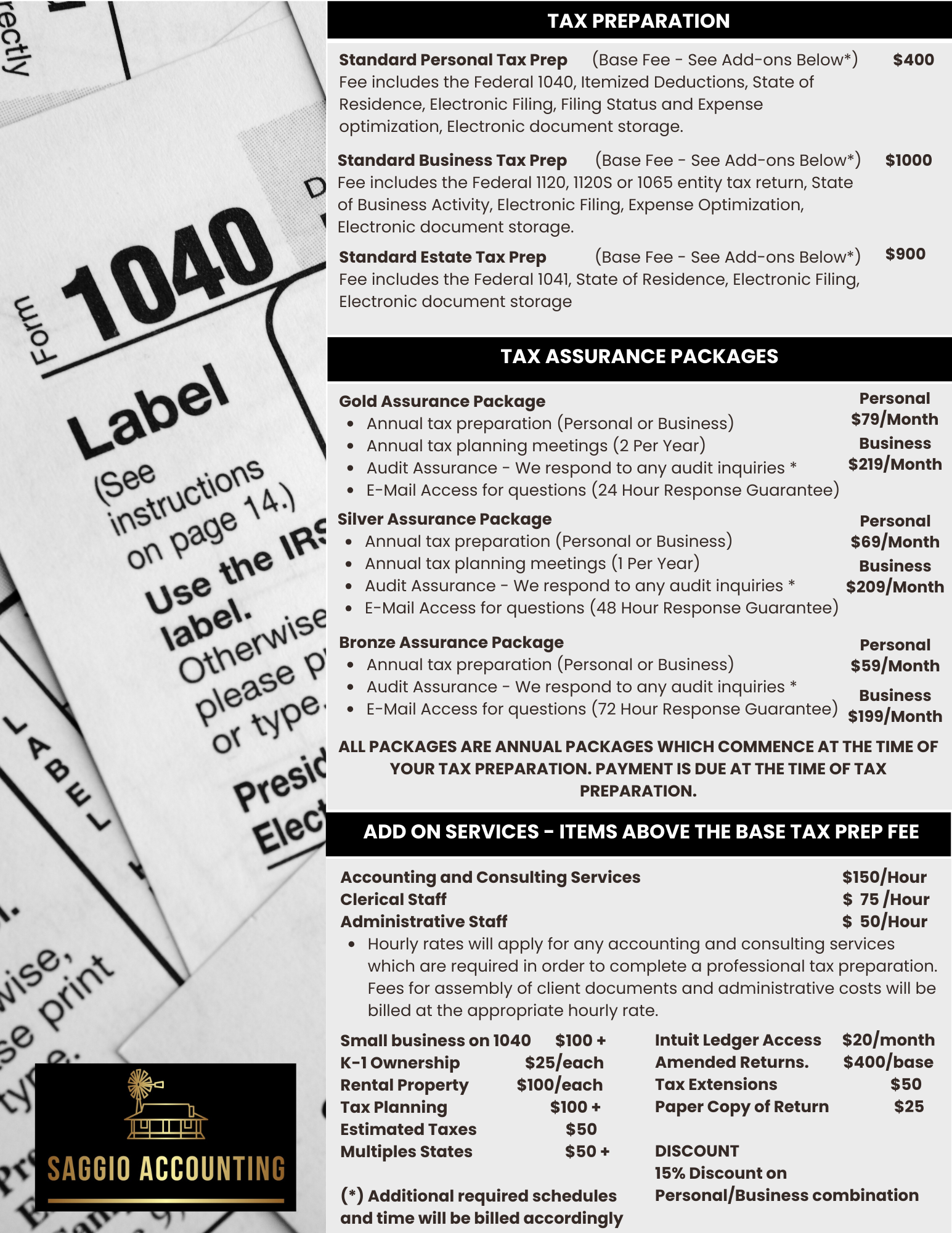
In addition to our normal tax preparation service, we also offer the Tax Assurance Packages for those clients who want more than just a tax preparation. These packages are annual packages which provide superior tax preparation, tax planning and access to a tax expert via e-mail. All of these additional services are free of charge to those clients who select on of our Tax Assurance Packages.
Bronze Assurance Package
-
Annual Tax Preparation
-
Audit Assistance - We respond to audit inquiries
-
E-Mail Access for questions (72 Hour Response)
Gold Assurance Package
-
Annual Tax Preparation
-
2 Tax Planning Meetings per year
-
Audit Assistance - We respond to audit inquiries
-
E-Mail Access for questions (24 Hour Response)
Silver Assurance Package
-
Annual Tax Preparation
-
Annual Tax Planning Meeting
-
Audit Assistance - We respond to audit inquiries and E-Mail Access for questions (36 Hour Response)
TAX ASSURANCE PRICING
Business Income Tax Services
In addition to our normal tax preparation service, we also offer the Tax Assurance Packages for those clients who want more than just a tax preparation. These packages are annual packages which provide superior tax preparation, tax planning and access to a tax expert via e-mail. All of these additional services are free of charge to those clients who select on of our Tax Assurance Packages. These packages include both the business and personal tax related preparation services.
Bronze Assurance Package
-
Annual Tax Preparation (Business and Personal)
-
Audit Assistance - We respond to audit inquiries
-
E-Mail Access for questions (72 Hour Response)
Gold Assurance Package
-
Annual Tax Preparation (Business and Personal)
-
2 Tax Planning Meetings per year
-
Audit Assistance - We respond to audit inquiries
-
E-Mail Access for questions (24 Hour Response)
Silver Assurance Package
-
Annual Tax Preparation (Business and Personal)
-
Annual Tax Planning Meeting
-
Audit Assistance - We respond to audit inquiries and E-Mail access for questions (48 Hour Response)